Oh. My. Goodness. I can't believe it is July already. Really I feel like this is my first week of summer. I know that school let out June 18 (really late this year) and then we had one quick week of scrambling and packing before we left to visit our families in Indiana for a week. And whoooshh! Here we are in July and I feel like my summer is just beginning.
Since I live on the academic calendar, summer is when I make my version of New Year's resolutions. Here's my admittedly-ambitious list for this summer:
-Paint living room trim
-Clean and organize office/studio
-Deep clean the basement (where the dogs reside, ick!)
-Learn to sew from Japanese sewing books
-Learn to sew knit children's clothes (already making progress on this, stay tuned)
-A secret art project that I've been mulling around for a while--you'll see it if it turns out
-Continue purging/organizing my wardrobe, including the search for a Uniform Dress
-Find and perfect a great black bean burger recipe
-Eat more fruits and veg (green smoothies, baby!)
-Lose 15 pounds (There, I said it. Now I have to do it)
-Exercise 45 minutes at least 4 days per week
-Sign up to run a 5k
-Get back into biking and sign up for some longer group rides (50 miles or more)
-Create play space for Silvie on our property--swing, sand box or table, and a teepee are what I have in mind
-Build our community by having friends over and getting more involved in church community
Alrighty, then. Commence summer!
--------------
If you have any recommendations for favorite healthy food, please comment. I'm especially looking for quick-prep summer food. Thank you.
Showing posts with label cleaning. Show all posts
Showing posts with label cleaning. Show all posts
08 July 2010


11 May 2009
Update: Laundry Soap
If you've been reading this blog for awhile (thanks), you may remember that I made Laundry Soap in September. I am happy to report that ONE BATCH lasted me all the way until this week. That's almost eight months of doing 4-5 loads of laundry per week for the Wise and Bearded One and myself (we're not very good about rewearing clothes between washes). Plus there was a lot of pre-washing of hand-me-down baby clothes. And then these last 9 weeks we've been washing at least one load a day, and usually two, just to stay on top of the cloth diapering situation. All that to say that one batch of laundry soap lasts a heckuva long time--at least 180 loads!
Tonight I made a quick 1/4th batch with stuff I had on hand but I'll need to make another big batch this summer. I can recommend this laundry soap by saying that for the normal kinds of laundry (not too soiled) I can't tell the difference between this and the store bought brands. It's even been doing pretty well with the cloth diapers. I do a quick cold wash to just rinse the doggone diapies and then I add other baby clothes, towels, etc. and do a hot cycle with the laundry soap. There are a few light stains left on some of the poopy diapers but I'm planning to occasionally run the whole batch through with Oxyclean to make them whiter.
My worst laundry problem is grease spots on t-shirts. Any ideas out there on how to deal with this? So far, dish soap seems to be the best grease fighter that I've found but it seems like there should be an even better solution.
21 April 2009
Green: Choosing Nontoxic Skincare Products
Today is Holocaust Remembrance Day and tomorrow is Earth Day. Coincidence? Maybe, but I've been thinking about how humans are the only species that knowingly poison our own and ruin our own habitat. I'm not trying to equate the Holocaust and the decimation of the environment--they're different kinds of cruelty. But both require(d) humans to be indifferent and passive to a known danger. Because I can do something about the environment, at least the environment of my home and my local community, I must act. Even if it's in my own micro-cosmic way. (But isn't that what it will take? Each of us cleaning up our own little corner of the environment? Voting with our consumer dollar? Talking to our friends about it?)
I've blogged earlier about my attempts to move away from toxic cleaning supplies and laundry soaps, but with a new baby I've been thinking more about bath and skincare products. Coming home from the hospital, we were given a bunch of freebies from the big baby products giants...some disposable diapers, baby lotion and shampoo, etc. Despite the implied endorsement of the these products by the hospital, a recent study found possible carcinogens in baby toiletries.
So, I'm wary about toxic chemicals in my home, but how should one choose bath, body or baby products? We've been trained to check food labels to avoid high fructose corn syrup and saturated fats. Are there similar ingredients we can learn to avoid in skin care?
I'm no scientist but I've done some reading on this subject and here are some things that make sense to me:
1. Use less: Do you even need it? Can you use a small dot instead of a big "dollop"?
2. Avoid petrochemicals: Why would we put petroleum-based products on our skin? Especially when there are centuries of "research" on using plant-based products with much smaller environmental impact? Propyl-, methyl-, eth- or -ene are prefixes and suffixes that indicate petrochemicals. Mineral oil is also a petrochemical. Many petroleum byproducts are believed to be carcinogenic on their own or as they break down and combine with other chemicals.
3. Avoid parabens: One variety of petrochemicals, parabens, are used as preservatives and antibacterials in creams and lotions. These Nasties are hormone disrupters and probably the reason we have 6-legged frogs, intersex fish, and may be even indicated in human disabilities and diseases.
4. Avoid fragrance: "Fragrance" is undefined and unregulated. Many fragrances are synthetic and may cause headaches, dizziness, allergic reactions, and skin irritation. Fragrances are often used to mask chemical smells and to create "brand identity". When we think babies are "supposed" to smell like a certain product (Baby Magic?) then we've been suckered into the fragrance game.
This list is, by no means, all inclusive. These are just the "easy-to-look-for" and commonly-believed-to-be-harmful items that I look for on a product label. In the next couple of days, I'm going to examine common skin care products for babies and see if they pass or fail my guidelines.
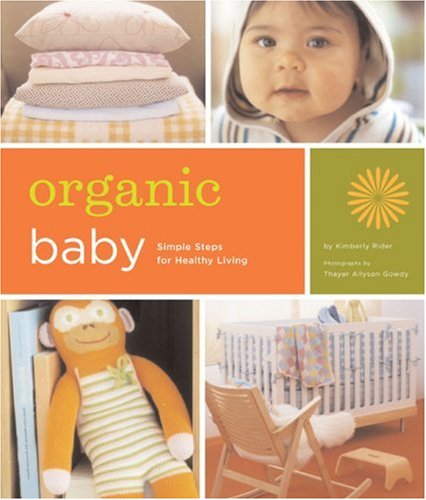 If you want to go deeper and learn more about nontoxic products, let me recommend the following websites and books that help us understand the substances we put on our precious skin:
--Organic Baby: Simple Steps for Healthy Living by Kimberly Rider; This book, although very simplistic, helped me think about resisting consumerism around all sorts of baby junk, not just skin care. It has a more complete list of Nasties to avoid.
--Safe Mama bills itself as "the original one-stop child safety, product recall, health, wellbeing, non-toxic, eco-conscious resource, for parents". They have cheat sheets that review many different products and I find helpful.
--Skin Deep Cosmetic Safety Database and the Campaign for Safe Cosmetics are websites where you can look at the breakdown of the ingredients of thousands of beauty products and think for yourself about what is acceptable for your skin.
--GoodGuide helps you find safe, healthy and green products.
--Pure Skin: Organic Beauty Basics by Barbara Close; This (library) book has lots of recipes to make your own skin care products (I haven't tried them so this is no endorsement), but also has a chapter on the the products used in the cosmetics industry--both Nasty and Nice.
One last thing:
I heard Poisoned Waters discussed on Fresh Air yesterday and I plan on watching it tonight and recommend you do so too. Our actions through factory farming, pharmeceuticals, and common household products are poisoning our waterways. You can watch it on PBS or on-line.
I've blogged earlier about my attempts to move away from toxic cleaning supplies and laundry soaps, but with a new baby I've been thinking more about bath and skincare products. Coming home from the hospital, we were given a bunch of freebies from the big baby products giants...some disposable diapers, baby lotion and shampoo, etc. Despite the implied endorsement of the these products by the hospital, a recent study found possible carcinogens in baby toiletries.
So, I'm wary about toxic chemicals in my home, but how should one choose bath, body or baby products? We've been trained to check food labels to avoid high fructose corn syrup and saturated fats. Are there similar ingredients we can learn to avoid in skin care?
I'm no scientist but I've done some reading on this subject and here are some things that make sense to me:
1. Use less: Do you even need it? Can you use a small dot instead of a big "dollop"?
2. Avoid petrochemicals: Why would we put petroleum-based products on our skin? Especially when there are centuries of "research" on using plant-based products with much smaller environmental impact? Propyl-, methyl-, eth- or -ene are prefixes and suffixes that indicate petrochemicals. Mineral oil is also a petrochemical. Many petroleum byproducts are believed to be carcinogenic on their own or as they break down and combine with other chemicals.
3. Avoid parabens: One variety of petrochemicals, parabens, are used as preservatives and antibacterials in creams and lotions. These Nasties are hormone disrupters and probably the reason we have 6-legged frogs, intersex fish, and may be even indicated in human disabilities and diseases.
4. Avoid fragrance: "Fragrance" is undefined and unregulated. Many fragrances are synthetic and may cause headaches, dizziness, allergic reactions, and skin irritation. Fragrances are often used to mask chemical smells and to create "brand identity". When we think babies are "supposed" to smell like a certain product (Baby Magic?) then we've been suckered into the fragrance game.
This list is, by no means, all inclusive. These are just the "easy-to-look-for" and commonly-believed-to-be-harmful items that I look for on a product label. In the next couple of days, I'm going to examine common skin care products for babies and see if they pass or fail my guidelines.
If you want to go deeper and learn more about nontoxic products, let me recommend the following websites and books that help us understand the substances we put on our precious skin:--Organic Baby: Simple Steps for Healthy Living by Kimberly Rider; This book, although very simplistic, helped me think about resisting consumerism around all sorts of baby junk, not just skin care. It has a more complete list of Nasties to avoid.
--Safe Mama bills itself as "the original one-stop child safety, product recall, health, wellbeing, non-toxic, eco-conscious resource, for parents". They have cheat sheets that review many different products and I find helpful.
--Skin Deep Cosmetic Safety Database and the Campaign for Safe Cosmetics are websites where you can look at the breakdown of the ingredients of thousands of beauty products and think for yourself about what is acceptable for your skin.
--GoodGuide helps you find safe, healthy and green products.
--Pure Skin: Organic Beauty Basics by Barbara Close; This (library) book has lots of recipes to make your own skin care products (I haven't tried them so this is no endorsement), but also has a chapter on the the products used in the cosmetics industry--both Nasty and Nice.
One last thing:
I heard Poisoned Waters discussed on Fresh Air yesterday and I plan on watching it tonight and recommend you do so too. Our actions through factory farming, pharmeceuticals, and common household products are poisoning our waterways. You can watch it on PBS or on-line.
11 November 2008
Procrastinating with the Cleaning Supplies
The other week, our house desperately needed to be cleaned. We were emerging from our self-imposed introverted-ness to host a crafty workday, an election night watching party, and then some out of town friends with small children. The house was....well, let's be honest....it was dirty. Two dirty dogs dirty.
But I was having a tough week at work and that, combined with pregnancy, made the thought of cleaning overwhelming. So overwhelming that I turned to my old friend Procrastination to help out. Procrastination had the brilliant idea that if I sorted out my cleaning supplies and made them all pretty, I would be more motivated to actually clean the house. So I listened to Procrastination and did as she suggested.
Here's our under-the-sink cleaning supplies before:
Over the last couple of years, I've consciously tried to move to less-toxic, more-sustainable cleaning supplies. I thought I was doing pretty well until I actually went through all of our cleaning supplies. I found:
-5 toxic cleaning supplies, so toxic that I couldn't read the label and I didn't want them in the house so I banished them to the garage. I'm not a total purist, I can see that we may eventually need "lime away" or "the works" but they can be stored in the high cabinet in the garage along with the pesticides and nasty car-related stuff. And who bought that Lysol??? It wasn't me!
-Multiples of several types of supplies. Clearly this cabinet has been a mess so long that I didn't realize I had 3 different types of furniture polish.
-A good start toward better cleaning practices: baking soda, Bon Ami, natural furniture polish, Murphy's oil soap, vinegar, lots of spray bottles that can be re-purposed.
Here's the after:
 It may not look much better but it IS much more logical.
-On the right side is the caddy with the most commonly used general cleaners. The theory is that I could take the caddy with me from room to room as I clean.
-On the left side is a basket I re-purposed to hold all the old cut-up t-shirts that I use for cleaning rags.
-Behind the basket are the raw materials to make more natural cleaners--the baking soda, the vinegar, the Castille soap, extra spray bottles.
-On Stephanie's suggestion, I also purchased BioKleen's Bac-Out (Stain & Odor Eliminator--good for the pet smells) and All-Purpose cleaner. I like that they come in a concentrated formula and then you dilute them in a spray bottle for use. They are the green-labeled bottles in the rear left.
When I was finished, Procrastination and I were still good friends and I managed to put off cleaning for another night. Fortunately, I have a wise and bearded husband who helped me get all the cleaning done in time despite my date with Procrastination.
If you have not looked into using less toxic cleaning supplies, I highly recommend you do some research. It's frankly frightening the known allergens, volatile organic compounds, and poisons that we willingly bring into our households and flush into our water supply. You don't have to be "extremely green" to want a home that is safe for you and the ones you love.
But I was having a tough week at work and that, combined with pregnancy, made the thought of cleaning overwhelming. So overwhelming that I turned to my old friend Procrastination to help out. Procrastination had the brilliant idea that if I sorted out my cleaning supplies and made them all pretty, I would be more motivated to actually clean the house. So I listened to Procrastination and did as she suggested.
Here's our under-the-sink cleaning supplies before:

Over the last couple of years, I've consciously tried to move to less-toxic, more-sustainable cleaning supplies. I thought I was doing pretty well until I actually went through all of our cleaning supplies. I found:
-5 toxic cleaning supplies, so toxic that I couldn't read the label and I didn't want them in the house so I banished them to the garage. I'm not a total purist, I can see that we may eventually need "lime away" or "the works" but they can be stored in the high cabinet in the garage along with the pesticides and nasty car-related stuff. And who bought that Lysol??? It wasn't me!
-Multiples of several types of supplies. Clearly this cabinet has been a mess so long that I didn't realize I had 3 different types of furniture polish.
-A good start toward better cleaning practices: baking soda, Bon Ami, natural furniture polish, Murphy's oil soap, vinegar, lots of spray bottles that can be re-purposed.
Here's the after:
 It may not look much better but it IS much more logical.
-On the right side is the caddy with the most commonly used general cleaners. The theory is that I could take the caddy with me from room to room as I clean.
-On the left side is a basket I re-purposed to hold all the old cut-up t-shirts that I use for cleaning rags.
-Behind the basket are the raw materials to make more natural cleaners--the baking soda, the vinegar, the Castille soap, extra spray bottles.
-On Stephanie's suggestion, I also purchased BioKleen's Bac-Out (Stain & Odor Eliminator--good for the pet smells) and All-Purpose cleaner. I like that they come in a concentrated formula and then you dilute them in a spray bottle for use. They are the green-labeled bottles in the rear left.
When I was finished, Procrastination and I were still good friends and I managed to put off cleaning for another night. Fortunately, I have a wise and bearded husband who helped me get all the cleaning done in time despite my date with Procrastination.
If you have not looked into using less toxic cleaning supplies, I highly recommend you do some research. It's frankly frightening the known allergens, volatile organic compounds, and poisons that we willingly bring into our households and flush into our water supply. You don't have to be "extremely green" to want a home that is safe for you and the ones you love.
11 October 2008
"Green" Clean in the Kitchen

In my on-going effort to have fewer toxic substances in our household, I've experimented with several different dish soaps and cleaning options. Here's my current line-up:
--Dr. Bronner's Castile Soap with the yummy peppermint smell. I really like this as a mild soap for cleaning just about everything. It's a little spendy for dishwashing though at $9/bottle at my local grocery store. Plus, I think we use it too quickly--it squirts out easily. I'm trying to fade it's use in the dishwashing arena, but I do really love it. I just discovered that I can refill my bottle at the local New Seasons but I haven't tried it yet so I don't know how much it would cost. One note, if you haven't used natural soaps before, don't be surprised that they don't bubble much.
--J.R. Watkin's Natural Home Care Aloe and Green Tea dish soap is my newest addition. I haven't used enough of it yet to have a strong opinion but I like the following things about it: a. it's available at Target, my big-box-store weakness, b. it was reasonably priced, c. it's free of phosphates and sodium laurel sulfate, and d. it has totally killer retro packaging that I am a complete sucker for.
--My home-made "soft scrub" is a mix of Dr. Bronner's castile soap, baking soda, and borax. It's gritty, it smells good and it cleans stuck-on-stuff pretty well. It's handy for scrubbing the bathroom sink too.
--Not pictured is my OXO Steel Soap-Squirting Palm Brush. I love this thing and I use it every time I do dishes. It's especially great if you just want to wash one or two things and don't want to run a whole sink full of soapy water--you can dispense the soap you need straight through the brush. I've gone through several of the old design and just upgraded to the Steel version. I am hopeful I'll like this one even better since I can buy replacement brushes instead of throwing the whole thing out when it gets gnarly.
--Last but not least, this is my only super handy kitchen cleaning tip (I am NO domestic goddess!): If you want to scrub up metal--especially the copper bottoms of your cooking pots--this is the best nontoxic way. Cut a lemon in half. Sprinkle salt on the surface you want to clean. Use the lemon half and the salt to scrub away at the copper. Something about the acids from the lemon combined with the grit of the salt makes it all work wonderfully. Plus you don't have to feel any guilt rinsing it off in the sink--no nasty chemicals going into the Willamette River, thank you very much!
So, that's what I'm using right now. I'm curious to hear what environmentally-friendly kitchen products you are using so please post a comment!
24 September 2008
Natural Laundry Soap
In part due to the pregnancy, I've been reexamining the sustainability and toxicity of our household cleaning products and personal care products. I am most particular about substances that are ingested or contact the skin. Thinking about this brought me back to my desire to make my own laundry soap again.
I did this for awhile about 5 years ago and it worked well but then we moved and I lost my sources for soap flakes. Plus, in Portland it is easy to find environmentally-friendly laundry soap such as Seventh Generation, Ecover, etc. However, I like having total control of the ingredients (what? me wanting to control something?!) and I like using large glass containers that can be used over and over again instead of discarding the plastic tub every few weeks.
So I did the obvious thing. I searched the internets for websites with laundry soap recipes:
http://www.soap-flakes.com/recipes.html
http://www.instructables.com/id/Homemade-Laundry-Detergent/
http://www.thesimpledollar.com/2008/04/09/making-your-own-laundry-detergent-a-detailed-visual-guide/
http://www.naturalhomemagazine.com/Inspiration/2000-05-01/laundryrecipe.aspx
 I considered making a wet soap since there are some concerns that when you wash with cold water (as I do) the soap flakes in dry formulas may not dissolve fully. However, most of the wet soap recipes use washing soda which is the more caustic twin of baking soda and requires that you wear gloves when handling it. And you know how often I wear gloves! (never, not even when pruning roses until my hands start to bleed and I remember that I have a perfectly good pair of leather gloves in the garage, but that's another story) Plus washing soda wasn't available at my local grocery stores so I decided to go with the Natural Home recipe:
16 cups baking soda
12 cups borax
8 cups grated castile or glycerin soap flakes*
3 tablespoons lavender, lemon, or grapefruit essential oil (I don't use that much because I don't like strong scents)
 Combine baking soda, borax, and soap flakes, add essential oil, and mix with a wire whisk. Use 1/8 cup of powder per load. This recipe makes enough powder to last a family of four one year.
All the ingredients were available between my local Safeway and New Seasons. Since I was too impatient to order soap flakes from an importer (they're no longer made in the States), I determined to buy the soap with the label that I could understand.
I tried several different grating options to try to find the finest grate (please don't kill me, Pamper Chef Lady, for misuse of a mandolin). I settled on the microplane that we usually use to grate lemon rinds and the like. Thirty minutes of an HGTV show and one skinned knuckle later I had well over the 8 cups of soap needed for the recipe (3 bars would probably be enough).
Then I started mixing my ingredients. I took my two biggest mixing bowls and mixed half a recipe in each. I'm terrible at English measurements (oh, when can we switch to metric? They promised in 4th grade that it was coming soon!) so I had to learn that largest box of baking soda is really on 8 cups worth. Fortunately I had two other big boxes of baking s oda around the house so I threw them in too. Plus 1/2 of an old box of Borax lying around. And a tablespoon or so of some lemon essential oil left over from when I made laundry soap long long ago.
The results: 3 mongo-size IKEA containers of natural lemon-scented laundry soap. Plus 2 recycled spaghetti jars worth. But they weren't pretty so they didn't make it into the picture. So far I've done several loads of laundry and can't tell the difference from using commercial laundry detergent (as long as I'm diligent about pre-treating stains, which I always suck at).
 Anybody else up to trying to make their own laundry soap? I think my sister tried a different recipe and wasn't as satisfied. Care to comment, sis?
----------------
ADDENDUM: I made a second batch in June 2009 and took the time to calculate costs to make a batch.
--3 bars Kirk's Castile Bar Soap at $1.39 = $4.17
--16 cups Baking Soda (I used less than half of 12 pound bag from Costco that I bought for $5.88) = $2.94
--1 1/2 boxes 20 Mule Team Borax (76 oz. box for $4.39 at New Seasons) = $6.59
--Essential oils I had from earlier projects so I did not purchase any = free
TOTAL COST $13.70
YIELD: 36 cups using 1/8 cup per load = 288 loads
TOTAL COST PER LOAD = less than 5 cents
I did this for awhile about 5 years ago and it worked well but then we moved and I lost my sources for soap flakes. Plus, in Portland it is easy to find environmentally-friendly laundry soap such as Seventh Generation, Ecover, etc. However, I like having total control of the ingredients (what? me wanting to control something?!) and I like using large glass containers that can be used over and over again instead of discarding the plastic tub every few weeks.
So I did the obvious thing. I searched the internets for websites with laundry soap recipes:
http://www.soap-flakes.com/recipes.html
http://www.instructables.com/id/Homemade-Laundry-Detergent/
http://www.thesimpledollar.com/2008/04/09/making-your-own-laundry-detergent-a-detailed-visual-guide/
http://www.naturalhomemagazine.com/Inspiration/2000-05-01/laundryrecipe.aspx
 I considered making a wet soap since there are some concerns that when you wash with cold water (as I do) the soap flakes in dry formulas may not dissolve fully. However, most of the wet soap recipes use washing soda which is the more caustic twin of baking soda and requires that you wear gloves when handling it. And you know how often I wear gloves! (never, not even when pruning roses until my hands start to bleed and I remember that I have a perfectly good pair of leather gloves in the garage, but that's another story) Plus washing soda wasn't available at my local grocery stores so I decided to go with the Natural Home recipe:
16 cups baking soda
12 cups borax
8 cups grated castile or glycerin soap flakes*
3 tablespoons lavender, lemon, or grapefruit essential oil (I don't use that much because I don't like strong scents)
 Combine baking soda, borax, and soap flakes, add essential oil, and mix with a wire whisk. Use 1/8 cup of powder per load. This recipe makes enough powder to last a family of four one year.
All the ingredients were available between my local Safeway and New Seasons. Since I was too impatient to order soap flakes from an importer (they're no longer made in the States), I determined to buy the soap with the label that I could understand.
I tried several different grating options to try to find the
 finest grate (please don't kill me, Pamper Chef Lady, for misuse of a mandolin). I settled on the microplane that we usually use to grate lemon rinds and the like. Thirty minutes of an HGTV show and one skinned knuckle later I had well over the 8 cups of soap needed for the recipe (3 bars would probably be enough).
Then I started mixing my ingredients. I took my two biggest mixing bowls and mixed half a recipe in each. I'm terrible at English measurements (oh, when can we switch to metric? They promised in 4th grade that it was coming soon!) so I had to learn that largest box of baking soda is really on 8 cups worth. Fortunately I had two other big boxes of baking s
 oda around the house so I threw them in too. Plus 1/2 of an old box of Borax lying around. And a tablespoon or so of some lemon essential oil left over from when I made laundry soap long long ago.
The results: 3 mongo-size IKEA containers of natural lemon-scented laundry soap. Plus 2 recycled spaghetti jars worth. But they weren't pretty so they didn't make it into the picture. So far I've done several loads of laundry and can't tell the difference from using commercial laundry detergent (as long as I'm diligent about pre-treating stains, which I always suck at).
 Anybody else up to trying to make their own laundry soap? I think my sister tried a different recipe and wasn't as satisfied. Care to comment, sis?
----------------
ADDENDUM: I made a second batch in June 2009 and took the time to calculate costs to make a batch.
--3 bars Kirk's Castile Bar Soap at $1.39 = $4.17
--16 cups Baking Soda (I used less than half of 12 pound bag from Costco that I bought for $5.88) = $2.94
--1 1/2 boxes 20 Mule Team Borax (76 oz. box for $4.39 at New Seasons) = $6.59
--Essential oils I had from earlier projects so I did not purchase any = free
TOTAL COST $13.70
YIELD: 36 cups using 1/8 cup per load = 288 loads
TOTAL COST PER LOAD = less than 5 cents
Subscribe to:
Posts (Atom)